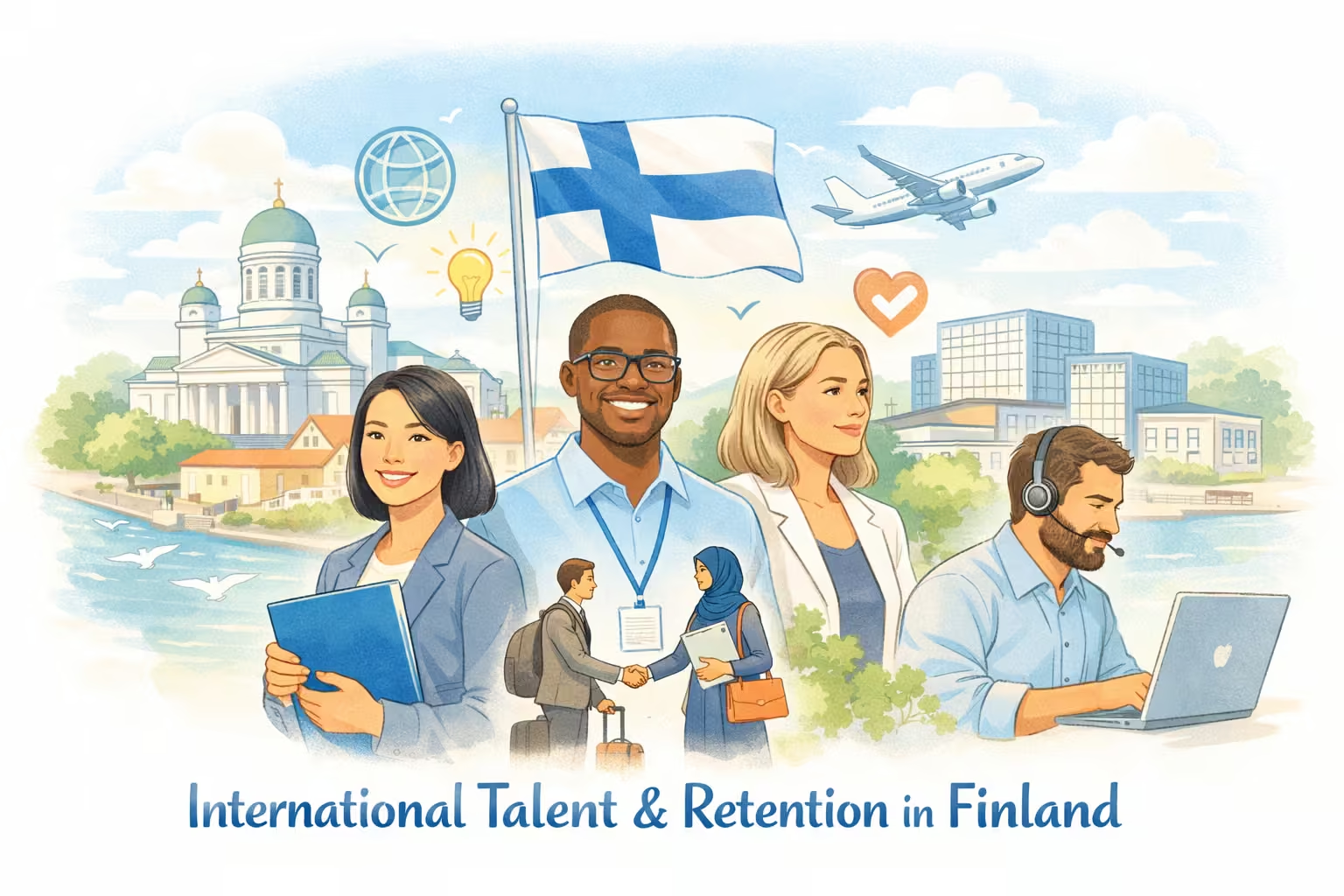
International Talent & Retention in Finland — Why Attraction Isn’t Enough
“What if Finland’s next big export isn’t tech, but talent?”
Finland is a nation that is still mastering the art of retention.
New data show that only 47% of international tech professionals in Finland now plan to stay long-term. (Yle.fi) The rest? They often leave due to factors beyond the job itself. Issues of belonging limited professional networks, or slow integration into Finnish society are bigger obstacles.
Let’s unpack what’s really going on and what can be done differently.
1. Finland’s Strength: The Attraction Engine
Finland’s global brand remains strong: clean society, high safety, digital-first infrastructure, a strong work-life balance mindset.
Efficient and reliable services: Government services, public transport, and infrastructure are highly efficient and reliable, with minimal corruption.
The invitation is there. The “first step” into Finland works.
Free and high-quality education: Education is free from primary to doctoral level, with a high standard of teaching.
Attraction isn’t the problem. What happens after you arrive is where the effort needs to go.
2. The Retention Challenge
Some of the key issues behind retention include:
Most departures happen in the 12-24 months after arrival: integration fatigue, job mismatch, language/cultural barriers.
The survey by TEK shows fewer than half of international experts would recommend Finland as a place to live and work. (TEK – Link was mysteriously removed over the past several weeks).
Barriers cited include Finnish (or Swedish) language demands, limited networks and slower assimilation of foreign-trained talent.
Employers and policy frameworks still expect newcomers to adapt, rather than evolving to meet talent halfway. (Finland’s startup sector criticises new government’s hardline immigration policy, 2023)
Retention is not just about offering a contract. It’s about offering a career, a community, a sense of belonging.
3. What Works: Emerging Best Practices
Here are some examples of what is starting to deliver:
Mentoring and hackathon programs, where international professionals are paired with Finnish-based mentors to help navigate the ecosystem.
Municipal and company-level initiatives focusing on family integration, networks, language support and career pathing.
Role of events such as the Talent Boost Summit 2025 — bringing together public sector, companies and decision-makers to deliberate on attraction and retention strategies.
These are not “nice to have” extras. They are strategic investments in Finland’s competitive edge.
🚀 4. The Business Case for Retention
Let’s talk ROI. Retaining international talent isn’t just a moral argument — it’s an economic imperative.
Each international hire that leaves early represents wasted recruitment, relocation and onboarding costs.
Loss of potential innovation, new perspectives, and global networks.
From the macro perspective: as noted by organization such as Rastor Institute, failing to properly leverage foreign-educated talent costs Finland an estimated €185 million annually in unrealised tax and productivity potential. (Rastor-instituutti)
Retention = built-in ROI. If you treat international talent as a short-term asset, you lose what could have become a long-term multiplier.
🌍 5. Rethinking Belonging
Belonging isn’t a corporate policy sheet, it’s the small human moments that build trust, loyalty, attachment. Things like:
A line-manager asking about cultural expectations or how things are going outside work.
A Finnish colleague inviting the newcomer to a social event, coffee, weekend gathering.
Company communications celebrating cultural diversity as meaningful, not tokenistic.
Municipal services and community offerings that make relocating families feel at home, not just “plugged in”.
If you build a place where people feel they “belong”, not just “work”, you improve retention dramatically.
🧭 6. What Finland Can Lead In
Finland could become the global front-runner not just in attracting international talent, but in retaining it and helping it flourish. That means:
Policy frameworks that shift from “welcome them in” to “make them stay”. For instance, streamlined processes, fewer bureaucratic hurdles, long-term residence clarity. (OECD)
Workplaces that invest in inclusive leadership, peer mentoring, and cross-cultural team design.
A society and ecosystem where multilingualism, global experience and cultural diversity are assets, not after-thoughts.
Enterprises that treat international hires as integral to strategy (not merely as “fill the gap”) linking retention to innovation, global markets, growth.
🎙️ Conclude
Attraction is only half the story for Finland. The bigger challenge and bigger opportunity, lies in building ecosystems where international professionals can not only land, but stay, grow and thrive.
If we get this right, Finland doesn’t just fill jobs, it builds futures and stabilized its own economy.